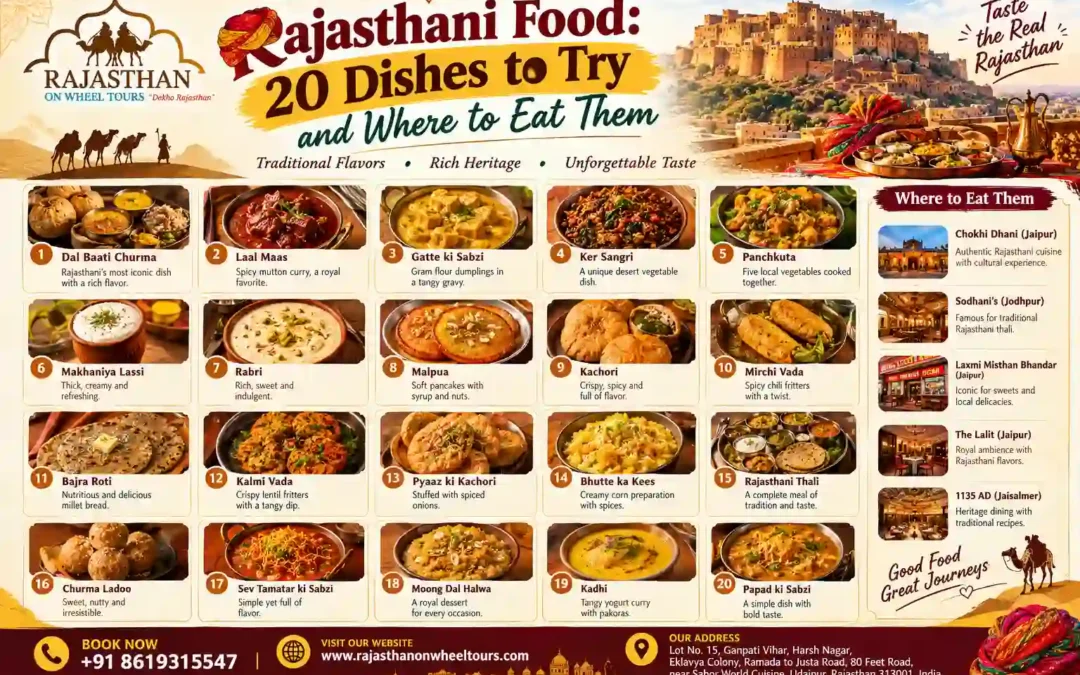
Quick answer: The most famous Rajasthani dishes are dal baati churma, laal maas, ker sangri, gatte ki sabzi, pyaaz kachori, mirchi vada, bajre ki roti with lahsun chutney, kadhi, and sweets like ghevar, mawa kachori and malpua. Rajasthani food was shaped by the desert: little water and few fresh vegetables, so cooks relied on lentils, gram flour, millet, dried desert beans, ghee and buttermilk. The best way to try it all is a Rajasthani thali.
You can see the desert in a Rajasthani plate. Dishes that last for days without spoiling. Gram flour standing in for vegetables. Millet bread instead of wheat. Ghee everywhere, because it keeps. Chilli, because it was cheap and preserved food in the heat. And a strong tradition of sweets, because every festival, wedding and pilgrimage in Rajasthan calls for them.
This guide covers what to eat, what it actually is, and where in Rajasthan each dish is at its best.
Rajasthani Food at a Glance
| Dish | What it is | Veg? | Best tried in |
|---|---|---|---|
| Dal baati churma | Baked wheat balls, lentils, sweet crumble | Veg | Everywhere |
| Laal maas | Fiery red mutton curry | Non-veg | Jodhpur, Jaipur |
| Ker sangri | Desert berries and beans | Veg | Jodhpur, Jaisalmer |
| Gatte ki sabzi | Gram flour dumplings in yoghurt curry | Veg | Everywhere |
| Pyaaz kachori | Fried pastry with spiced onion | Veg | Jaipur, Jodhpur |
| Mirchi vada | Stuffed, battered green chilli | Veg | Jodhpur |
| Bajre ki roti | Millet flatbread | Veg | Villages, winter |
| Kadhi | Yoghurt and gram flour curry | Veg | Everywhere |
| Ghevar | Honeycomb disc in syrup | Veg | Jaipur (Teej season) |
| Mawa kachori | Sweet fried pastry with milk solids | Veg | Jodhpur |
The Main Dishes
1. Dal Baati Churma
Rajasthan’s signature meal. Baati are hard, round wheat-flour breads baked in coals or an oven until crisp, then cracked open and soaked in ghee. They come with dal, usually a mix of lentils, and churma, a sweet crumble of ground baati, ghee and jaggery or sugar.
The story goes that soldiers buried dough in the hot sand before battle and came back to find it baked. True or not, it’s the dish every visitor should eat at least once, ideally hot, with plenty of ghee.
2. Laal Maas
The best-known non-vegetarian dish in Rajasthan. Mutton slow-cooked in a deep red gravy of Mathania chillies, yoghurt, garlic and ghee. It was a royal hunting dish, originally made with game. It’s hot, so ask for “less spicy” if you’re unsure. Jodhpur and Jaipur do it best.
3. Safed Maas
The gentle cousin of laal maas: mutton in a white gravy of yoghurt, cream, cashews and mild spices. A royal-kitchen dish worth trying if laal maas is too fiery.
4. Ker Sangri
The most desert dish of all. Ker is a small, sour wild berry, and sangri are long dried beans from the khejri tree, the tree the Bishnoi community protects. Both are dried, rehydrated and cooked with spices, oil and sometimes raisins. Tangy, chewy and unlike anything else in India. Best in Jodhpur and Jaisalmer, with bajra roti.
5. Gatte ki Sabzi
Gatte are dumplings of spiced gram flour, boiled, sliced, then simmered in a yoghurt-based curry. It’s a classic example of Rajasthani cooking making a “vegetable” dish without vegetables. You’ll find it on almost every thali.
6. Kadhi
Yoghurt and gram flour cooked into a tangy, spiced curry, often with pakoras (fritters) in it. Rajasthani kadhi is thinner and spicier than the Punjabi version. Simple, comforting and eaten with rice or bajra roti.
7. Bajre ki Roti with Lahsun Chutney
Flatbread made from bajra (pearl millet), a crop that grows in dry sand. It’s dense, nutty and especially popular in winter, served with white butter, jaggery, and a fiery red garlic chutney (lahsun chutney). The village meal of Rajasthan.
8. Papad ki Sabzi
Roasted papads broken into a spicy yoghurt gravy. Another dish born from scarcity, made from pantry staples when no fresh vegetables were around.
9. Panchkuta
A mix of five desert ingredients: ker, sangri, kumat seeds, dried chillies and gunda berries. A richer, more festive version of ker sangri, often served at weddings.
10. Khichdi and Bajra Khichdi
Rice and lentils cooked together, or the winter version made with millet and moong dal, topped with ghee. Simple, filling and easy on the stomach after a few rich meals.
Snacks and Street Food
11. Pyaaz Kachori
A flaky, deep-fried pastry stuffed with spiced onions, served with tamarind and mint chutneys. Jaipur claims it as its own, and the morning queues at the famous kachori shops in the old city prove the point. Jodhpur’s version is just as good.
12. Mirchi Vada
A big green chilli stuffed with spiced potato, dipped in gram flour batter and deep-fried. A Jodhpur speciality, especially near the Clock Tower. Usually less spicy than it looks.
13. Dal Kachori
Another fried pastry, stuffed with spiced moong dal. Crisper and drier than pyaaz kachori. A common breakfast across the state.
14. Bikaneri Bhujia
Thin, crunchy gram-flour noodles seasoned with spices. Bikaner is famous for them, and they’re sold in packets across India. Buy fresh in Bikaner if you can.
15. Makhaniya Lassi
A thick, sweet lassi topped with cream or butter, flavoured with cardamom and saffron. The Jodhpur version, sold near the Clock Tower, is almost a dessert.
Rajasthani Sweets
16. Ghevar
A disc of fried batter with a honeycomb texture, soaked in sugar syrup and often topped with cream (malai ghevar) and nuts. It’s traditionally made for the Teej and Raksha Bandhan festivals in the monsoon, so it’s freshest from July to August, especially in Jaipur.
17. Mawa Kachori
Jodhpur’s famous sweet: a fried pastry stuffed with mawa (reduced milk solids) and dry fruit, dipped in sugar syrup. Very rich. Share one.
18. Malpua
Small, fried pancakes soaked in syrup and often served with rabri (thickened sweet milk). Pushkar’s malpua is famous, and it’s an essential stop when you visit the lake town.
19. Churma Ladoo
Balls of churma bound with ghee and jaggery, often made at festivals and offered at temples.
20. Mohan Thaal and Rabri
Mohan thaal is a fudge-like sweet of gram flour, ghee and sugar. Rabri is milk slowly reduced until thick and sweet. Both turn up on festive thalis and in sweet shops across the state.
The Rajasthani Thali
If you only have one big meal, order a Rajasthani thali. A typical thali includes dal baati churma, gatte ki sabzi, kadhi, ker sangri or another dry vegetable, rice, rotis or bajra roti, papad, pickle, buttermilk and a sweet. Many restaurants serve it unlimited, refilling until you stop them.
Cooking Classes
A cooking class is one of the best ways to understand Rajasthani food. Udaipur, Jaipur and Jodhpur have home-based classes where a local family teaches dal baati, gatte ki sabzi or a full thali, then you eat what you’ve cooked. It’s also a good way to meet a Rajasthani family.
What to Eat in Each City
- Jaipur: Pyaaz kachori for breakfast, dal baati churma for lunch, ghevar in the monsoon. Our Jaipur sightseeing page covers the city’s sights.
- Jodhpur: Mirchi vada, makhaniya lassi and mawa kachori near the Clock Tower; laal maas for dinner. Pair it with our Mehrangarh Fort guide.
- Udaipur: Rooftop thalis with lake views, dal baati, and gatte ki sabzi. Many lake-facing restaurants serve both Rajasthani and international food.
- Jaisalmer: Ker sangri, bajra roti and a desert-camp dinner under the stars. See our places to visit in Jaisalmer.
- Pushkar: Strictly vegetarian, with malpua and rabri as the highlights. Our Pushkar travel guide has more.
- Bikaner: Bhujia and sweets, bought fresh.
Vegetarian and Dietary Notes
- Rajasthan is a great place for vegetarians. Most traditional dishes are vegetarian, and many towns, like Pushkar, are entirely meat-free.
- Jain food is common, especially near Ranakpur and in Jain dining halls. It excludes onion, garlic and root vegetables.
- Ghee is everywhere. If you’re vegan or lactose intolerant, ask before ordering; dals and breads are often finished with ghee or butter.
- Spice levels vary. Laal maas and lahsun chutney are genuinely hot. Asking for “kam teekha” (less spicy) works almost everywhere.
Rajasthani Breakfasts
Breakfast in Rajasthan is usually fried, spicy and eaten standing up at a busy stall.
- Kachori and aloo sabzi: dal or pyaaz kachori with a spicy potato curry.
- Poha: flattened rice cooked with onion, peanuts and turmeric, a lighter option.
- Jalebi and rabri: hot, crisp jalebis dipped in thick sweet milk.
- Mirchi vada and chai: the Jodhpur way to start the day.
Ask your hotel or driver where locals queue in the morning. The longer the line, the better the kachori.
Drinks to Try
- Chaas: spiced buttermilk, served with almost every meal and the best way to cool down.
- Makhaniya lassi: thick, sweet and topped with cream; Jodhpur is famous for it.
- Masala chai: sweet, milky and spiced, sold at every corner.
- Kesar doodh: hot saffron milk with nuts, especially in winter evenings.
- Thandai: cold, spiced almond milk, traditional during Holi.
Food Safety Tips for Travellers
- Eat where it’s busy. High turnover means fresh food.
- Go for freshly fried and hot at street stalls: kachori, mirchi vada and jalebi straight from the oil are usually safe.
- Drink bottled or filtered water, and be cautious with ice and raw salads in small places.
- Ease in. Rich, ghee-heavy meals on day one of a long road trip aren’t a great idea. Start with lighter thalis.
- Ask your driver. Experienced drivers know the clean, reliable dhabas on every highway.
Taste Rajasthan with Us
On our road trips, our drivers know the kachori shops, dhabas and thali places locals use, and we’ll build food stops into your route if you ask. See our 7-day Rajasthan road trip from Delhi for a route that covers Jaipur, Pushkar, Jodhpur and Udaipur.
Call or WhatsApp +91-8619315547 (Udaipur) or +91-9983889373 (Jaipur).
Planning more of Rajasthan? Browse all our guides on the Rajasthan Travel Blog.
Frequently Asked Questions
1. What is the most famous food of Rajasthan?
Dal baati churma is the most famous Rajasthani dish: baked wheat balls soaked in ghee, served with lentils and a sweet crumble called churma. Laal maas, ker sangri and gatte ki sabzi are also iconic.
2. Is Rajasthani food spicy?
Some dishes are very spicy, especially laal maas and garlic chutney, but many are mild, like gatte ki sabzi, kadhi and khichdi. You can ask for less spicy food in almost any restaurant.
3. Is Rajasthani food vegetarian?
Most traditional Rajasthani food is vegetarian, built on lentils, gram flour, millet, desert beans and dairy. Laal maas and safed maas are the best-known meat dishes.
4. What is ker sangri?
Ker sangri is a desert dish made from ker, a small sour wild berry, and sangri, dried beans from the khejri tree. They’re cooked with spices and oil and usually eaten with bajra roti.
5. What is laal maas?
Laal maas is a fiery red mutton curry made with Mathania chillies, yoghurt, garlic and ghee. It started as a royal hunting dish and is especially popular in Jodhpur and Jaipur.
6. What sweets is Rajasthan famous for?
Rajasthan is famous for ghevar, mawa kachori, malpua with rabri, churma ladoo, mohan thaal and Bikaneri sweets. Ghevar is traditionally made for the Teej festival in the monsoon.
7. What is a Rajasthani thali?
A Rajasthani thali is a platter with several dishes, typically dal baati churma, gatte ki sabzi, kadhi, a dry vegetable like ker sangri, rice, rotis, papad, pickle, buttermilk and a sweet.
8. Where can I eat the best pyaaz kachori?
Jaipur is most famous for pyaaz kachori, with long morning queues at old-city shops. Jodhpur’s kachoris are equally popular. Eat them hot, straight from the kadhai.
9. Why does Rajasthani food use so little water and vegetables?
Rajasthan’s desert climate made water and fresh vegetables scarce, so cooks relied on lentils, gram flour, millet, dried beans, ghee and buttermilk. Many dishes were designed to last several days without spoiling.
10. Is street food safe to eat in Rajasthan?
Generally yes, if you choose busy stalls and eat freshly cooked, hot food. Drink bottled or filtered water, be careful with ice and raw salads, and ease into rich food over the first few days.