Quick answer: Jawai is a stretch of granite hills and farmland in Rajasthan’s Pali district, about 3 hours from both Udaipur and Jodhpur, where wild leopards live among villages and temples instead of inside a national park. Safaris are open-jeep drives at dawn and dusk run by local camps and operators, not the Forest Department. October to March is the best time to visit, and a two-night stay gives you four safaris and the best sighting chances.
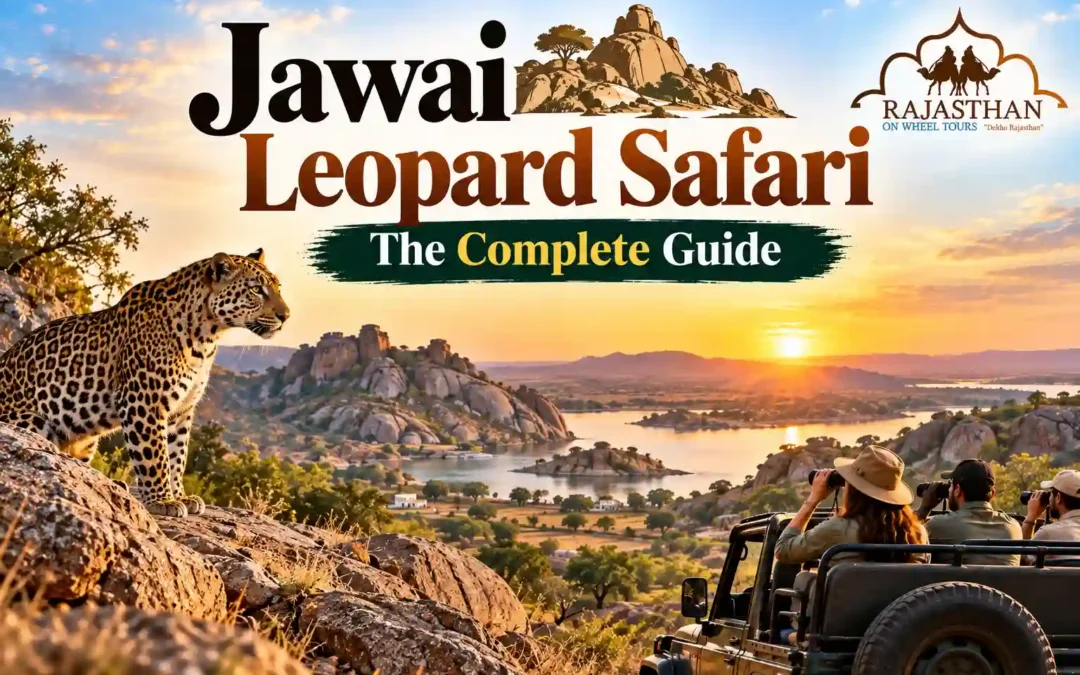
Jawai doesn’t look like leopard country. There’s no dense forest, no park gate, no zone map. There are huge granite boulders rising out of mustard fields, a big blue reservoir, shepherds in red turbans, and small temples perched on the rocks. And there are leopards, lying on those boulders at sunset as if they own the place. In a way, they do.
What Makes Jawai Different
Most big-cat safaris happen inside protected forests where people are kept out. Jawai is the opposite. The leopards here live side by side with the Rabari, a semi-nomadic herding community, and have done for generations.
Rabari families lose goats to leopards. They don’t retaliate. Many see the cats as part of the land, tied to the hill temples where the leopards sometimes rest. This coexistence is the heart of Jawai’s story, and it’s why visitors come away talking about the people as much as the cats.
Leopards here live in the caves and crevices of the granite hills. They’re estimated at several dozen in the wider landscape. The rocks keep them cool by day, and at dusk they come out to the ledges, which makes them unusually visible.
How Jawai Leopard Safaris Work
There’s no government booking portal and no zone system. Here’s how it actually works:
- Safaris are run by camps, lodges and local operators, usually in open Gypsy-style jeeps with a local tracker.
- Two slots a day: roughly sunrise to mid-morning, and mid-afternoon to just after sunset.
- Most camps include safaris in their stay packages, typically two per night.
- Trackers scan the hills with binoculars and use local knowledge of which cave each leopard favours.
- Sighting rates are high by big-cat standards. Guests on a two-night stay usually see at least one leopard, often more. It’s still wildlife, so nothing is guaranteed.
Leopards are often seen at a distance, on a rock face or ledge. Binoculars and a zoom lens make a real difference.
How Trackers Find Leopards
The skill of the local trackers is what makes Jawai work. Most grew up in these villages and know individual leopards by their markings, their favourite caves and their habits.
On a typical drive, your jeep will stop at a vantage point facing a granite hill. The tracker scans the rock faces with binoculars, looking for a flick of a tail, a shape on a ledge, or a patch of spotted coat against the stone. They also listen: peafowl and langur alarm calls often give a leopard away.
When a leopard is spotted, the jeep moves to a good viewing angle and stops. You might watch a mother with cubs on a ledge, a male stretching at the mouth of a cave, or a leopard walking slowly down to the fields as darkness falls. Sightings can last from a few seconds to over an hour.
A Typical Day at a Jawai Camp
- 6:00 AM – Tea and biscuits, then out on the morning safari.
- 9:30 AM – Back to camp for a full breakfast.
- Late morning – Rest, read, or take a village walk.
- 1:00 PM – Lunch.
- 3:30 PM – Afternoon safari, ending at a viewpoint or the dam for sunset.
- 7:30 PM – Dinner, often outdoors under the stars.
It’s an unhurried rhythm. Jawai is as much about slowing down as it is about leopards.
Photography Tips for Jawai
- Shoot in the golden hour. The granite glows orange at sunrise and sunset, and leopards are most active then.
- Use a long lens. Leopards are usually on distant rocks. 300–600 mm is ideal.
- Bring a beanbag. It steadies a heavy lens on the jeep’s frame.
- Push your ISO. Light drops fast at dusk; a slightly noisy sharp photo beats a blurry clean one.
- Include the landscape. The best Jawai photos show a leopard small on a huge rock, with a temple or village nearby.
Best Time for a Jawai Leopard Safari
| Season | Months | What to expect |
|---|---|---|
| Winter (best) | October – March | Cool days, cold dawns, clear light, migratory birds at the dam |
| Summer | April – June | Very hot days, but leopards are easier to spot on bare rocks at dusk |
| Monsoon | July – September | Green hills, fewer visitors; some camps close or reduce operations |
October to February is the sweet spot. You get comfortable temperatures, golden evening light on the granite, and the dam full of migratory birds.
Pack a warm jacket for December and January. Open jeeps at 6:30 AM are cold.
Beyond the Leopards: What Else to See
Jawai Dam (Jawai Bandh)
The reservoir that gives the region its name was built in the mid-20th century by the Jodhpur state under Maharaja Umaid Singh, and it’s one of the largest dams in western Rajasthan. It’s the region’s lifeline.
It’s also a wildlife hotspot in its own right. Mugger crocodiles bask on the banks, and in winter the water fills with migratory birds: bar-headed geese, ruddy shelducks, cranes and, in good years, flamingos. A sunset visit to the dam is part of most stays.
The Rabari herders
Many camps arrange visits to Rabari settlements. Rabari men are easy to recognise by their white clothes and bright red turbans; the women wear heavy jewellery and black or dark-coloured garments. Meeting them, seeing their cattle and hearing how they live with leopards adds depth to the whole experience.
Please ask before photographing people, and let your guide lead the visit.
Hill temples
Small shrines sit on many of the granite hills, some reached by rock-cut steps. Leopards are sometimes seen near them. It’s one of the most extraordinary sights in Jawai: a big cat resting on a ledge a short distance from a temple bell.
Birdlife and other animals
Beyond the dam, Jawai supports hyenas, jungle cats, desert foxes, nilgai and plenty of raptors. Striped hyenas are occasionally seen on evening drives.
Where to Stay in Jawai
Accommodation ranges from luxury tented camps to simple homestays and mid-range resorts. Most places sit in or around villages such as Bera, which lies close to the best leopard hills.
When choosing:
- Check how many safaris are included per night and whether they’re private or shared.
- Ask who runs the safaris: the property’s own trackers, or an outside operator.
- Look at location. Staying close to the leopard hills means less driving before each safari.
Two nights is the right length. It gives you four safaris and time for the dam, a village visit and some rest.
How to Reach Jawai
Jawai sits in Pali district, roughly between Udaipur and Jodhpur.
- From Udaipur: about 140–150 km, around 3 hours by road through the Aravallis.
- From Jodhpur: about 150–160 km, around 3 hours.
- By train: Jawai Bandh and Falna stations are the nearest. Your camp can usually arrange a pick-up.
- By air: Udaipur and Jodhpur are the nearest airports.
Many travellers combine Jawai with Ranakpur’s marble temple and Kumbhalgarh Fort. Our Udaipur–Kumbhalgarh–Jawai–Jodhpur–Jaisalmer tour builds all three into one route, and our Ranakpur Jain Temple guide explains the temple’s visiting hours.
Jawai vs Ranthambore: Which Should You Choose?
A question we’re asked often. They’re very different experiences.
| Jawai | Ranthambore | |
|---|---|---|
| Main animal | Leopard | Tiger |
| Setting | Granite hills, villages, farmland | Dry deciduous forest, lakes, fort ruins |
| Safari operator | Private camps and operators | Rajasthan Forest Department permits |
| Crowds | Low | High in peak season |
| Sightings | Leopards often seen, usually at a distance | Tigers regularly seen, not guaranteed |
| Best for | Photographers, repeat visitors, cultural travellers | First-time wildlife travellers |
If you’ve done a tiger reserve before, Jawai feels completely new. If it’s your first safari in India, Ranthambore’s tigers are hard to beat. With time, do both. See our Ranthambore safari booking guide.
Is Jawai Good for Families?
Yes, with a little planning. Children usually love the jeep drives, the crocodiles at the dam and the thrill of spotting a leopard through binoculars. A few things help:
- Pick a camp with a pool or open grounds so kids have something to do between safaris.
- Check age rules. Some camps set a minimum age for safaris, so ask before booking.
- Bring kid-sized binoculars. Spotting the leopard themselves is the highlight.
- Pack warm layers in winter. Early drives are colder than children expect.
- Keep expectations realistic. Explain that leopards are often seen at a distance on the rocks, so the excitement is in the search.
For older travellers, the jeep tracks can be bumpy. Let your camp know in advance so they can plan gentler routes.
Responsible Safari Tips
- Don’t ask your driver to get closer. Good operators keep a respectful distance, and leopards stay relaxed as a result.
- Keep quiet at sightings. Sound carries across the rocks.
- No spotlights or flash on animals.
- Respect village life. Stay on tracks, don’t enter homes or fields without permission, and ask before photographing people.
- Choose operators who care. Jawai’s leopards depend on the goodwill of local communities. Ask how your camp supports them.
What to Pack
- Binoculars (essential)
- A camera with a zoom lens of 300 mm or more if you’re serious about photos
- Neutral-coloured clothing
- A warm jacket, hat and gloves for winter mornings
- Sunscreen, sunglasses and a scarf for dust
- A small torch for evenings at camp
Plan Your Jawai Trip
We run cars to Jawai from Udaipur and Jodhpur, and combine it with Ranakpur, Kumbhalgarh or Mount Abu on longer routes. Tell us your dates and we’ll time your drive to arrive before the evening safari.
Call or WhatsApp +91-8619315547, or book a taxi from Udaipur.
Planning more of Rajasthan? Browse all our guides on the Rajasthan Travel Blog.
Frequently Asked Questions
1. Where is Jawai in Rajasthan?
Jawai is in Pali district in southern Rajasthan, roughly between Udaipur and Jodhpur. It’s known for its granite hills, the Jawai Dam, and the wild leopards that live among local villages.
2. Is a leopard sighting guaranteed in Jawai?
No sighting is guaranteed, but Jawai has high sighting rates for leopards. Most visitors on a two-night stay with four safaris see at least one leopard, usually resting on rocks at dawn or dusk.
3. How do Jawai leopard safaris work?
Safaris are run by private camps and local operators in open jeeps, usually at sunrise and in the late afternoon. There’s no government permit system like Ranthambore’s; most stays include safaris in the package.
4. What is the best time to visit Jawai?
October to March is best, with pleasant days, clear light and migratory birds at the dam. Summer is very hot but good for spotting leopards on bare rocks. Some camps reduce operations in the monsoon.
5. How far is Jawai from Udaipur?
Jawai is about 140–150 km from Udaipur, roughly 3 hours by road. It’s a similar distance from Jodhpur, which makes it a natural stop on a Udaipur–Jodhpur route.
6. How many days are enough for Jawai?
Two nights is ideal. That gives you four safaris to maximise leopard sightings, plus time to visit the Jawai Dam at sunset and a Rabari village.
7. Who are the Rabari people of Jawai?
The Rabari are a traditional herding community who have lived alongside Jawai’s leopards for generations. They tolerate occasional livestock losses and see the leopards as part of their land, which is key to the region’s coexistence story.
8. What else can I see in Jawai besides leopards?
You can see mugger crocodiles and migratory birds at the Jawai Dam, hill temples on the granite outcrops, hyenas, jungle cats and nilgai, and experience Rabari village life.
9. Is Jawai better than Ranthambore?
They offer different experiences. Ranthambore is a forest reserve known for tigers, while Jawai is open village country known for leopards and fewer crowds. Many wildlife lovers visit both.
10. Can I combine Jawai with Ranakpur and Kumbhalgarh?
Yes. Ranakpur’s Jain temple and Kumbhalgarh Fort both sit on the route between Udaipur and Jawai, making them easy to combine on a 3–4 day southern Rajasthan trip.