Quick answer: The Shrinathji Temple in Nathdwara, about 50 km north of Udaipur, opens for eight short darshans a day, from Mangla at around 5:15 AM to Shayan in the evening. Each darshan lasts only 15–45 minutes, with the temple closed in between. Entry is free. Times change daily with the season and festivals, so check the schedule the evening before.
Nathdwara isn’t like visiting a monument. The doors open, the crowd surges forward, and you get a few moments in front of the deity before the curtain closes again. First-time visitors who arrive without knowing the darshan schedule often wait hours, or miss it entirely. A little planning makes the difference.
Shrinathji Temple at a Glance
| Item | Details |
|---|---|
| Deity | Shrinathji, a form of the child Krishna |
| Tradition | Pushtimarg (Vallabh Sampradaya) |
| Location | Nathdwara, Rajsamand district, ~50 km from Udaipur |
| Temple established | Around 1672 |
| Entry | Free |
| Darshans | Eight a day, each 15–45 minutes |
| Phones / cameras | Not allowed inside; deposit at counters |
| Busiest times | Mangla and Rajbhog darshans, weekends, Janmashtami, Diwali–Annakut |
The Story of Shrinathji
Shrinathji is worshipped as Krishna at the age of seven, lifting Govardhan hill with his left hand to shelter the people of Braj from a storm. The idol is carved from a single block of black stone.
According to tradition, the idol was first worshipped at Govardhan, near Mathura. In the 1660s, to protect it from Mughal attacks during Aurangzeb’s reign, priests carried it west on a bullock cart. When the cart reached the village of Sinhad in Mewar, its wheels sank into the mud and wouldn’t move. The priests took it as a sign that the deity wished to stay. Maharana Raj Singh of Mewar offered protection, and the temple was built there around 1672. The town that grew around it became Nathdwara, the “gateway to the Lord”.
The temple is known locally as the haveli of Shrinathji, or Nandbhavan, because it’s built like a home rather than a grand temple. The deity is treated as a living child: woken, dressed, fed, taken out to play with the cows and put to bed. The eight darshans follow that daily routine.
What Is Pushtimarg?
Shrinathji is the central deity of Pushtimarg, the “path of grace”, founded by Vallabhacharya in the early 16th century. The tradition centres on loving devotion to Krishna as a child, through seva, or service. Instead of grand rituals, devotees care for the deity as they would a beloved child: offering food, clothes, music and festivals through the day and the year.
That’s why Nathdwara feels so different from many other temples. The deity’s clothes and jewellery change with the season and the festival. In winter, Shrinathji may be dressed in quilted clothes; in summer, light cotton and flowers. The food offerings, called bhog, follow the season too. Even the paintings hung behind the deity, the pichwais, are changed for each occasion.
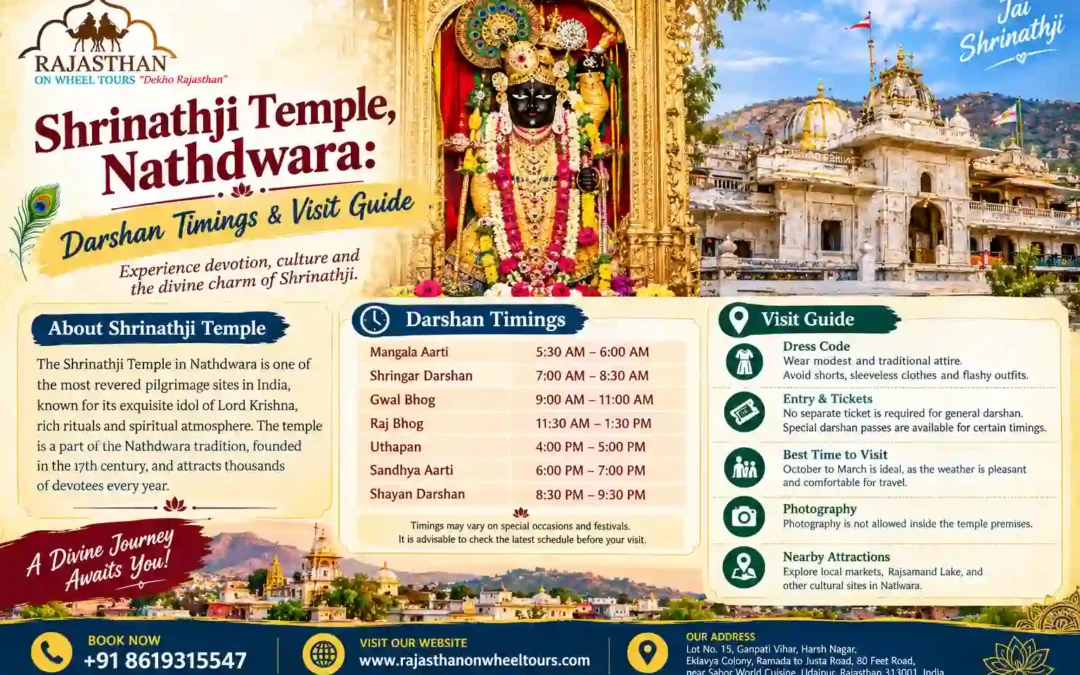
Nathdwara Darshan Timings
These are approximate times for a normal day. They shift through the year and change on festival days, sometimes by an hour or more.
| Darshan | Approx. time | What happens |
|---|---|---|
| Mangla | 5:15 – 6:00 AM | Shrinathji is woken; first darshan of the day |
| Shringar | 7:15 – 7:45 AM | Dressed and adorned with jewellery |
| Gwal | 9:15 – 9:30 AM | Goes to graze the cows with the cowherds |
| Rajbhog | 11:15 AM – 12:05 PM | Main midday meal offering; most elaborate darshan |
| Utthapan | 3:30 – 3:45 PM | Woken from the afternoon rest |
| Bhog | 4:15 – 4:30 PM | Afternoon snack offering |
| Sandhya Aarti | 5:15 – 6:00 PM | Evening aarti as the cows return |
| Shayan | 6:50 – 7:30 PM | Last darshan before rest (not held on some days of the year) |
Check before you go. The temple board publishes the next day’s darshan schedule each evening, and it’s posted in the town and shared online. Local shops and hotels know the times too.
Which Darshan Should You Attend?
- Mangla is the most special to many devotees, but also very crowded. Go if you can handle an early start and a strong press of people.
- Shringar is a good choice for first-timers. The deity is beautifully dressed, and the crowd is usually manageable.
- Rajbhog is the grandest darshan and the longest, so you have more time. It’s also very busy, especially at weekends.
- Sandhya Aarti suits day-trippers from Udaipur who want to return for the night.
If you’re visiting with elderly relatives or small children, avoid Mangla and pick Shringar or Utthapan.
Rules and Etiquette
- No phones, cameras, leather goods or bags inside. Deposit them at the counters outside. Keep only what you need.
- Dress modestly. Traditional dress is common; shorts and sleeveless tops aren’t appropriate.
- Remove footwear at the stands before entering.
- Separate queues for men and women at many darshans.
- Expect pushing at peak times. It’s part of the experience, but keep children close and hold onto valuables.
- Photography isn’t allowed anywhere inside. Images of the deity are available in the market.
Festivals and Crowds
Nathdwara is busiest during:
- Janmashtami (Krishna’s birthday, August/September)
- Diwali and Annakut (the day after Diwali, when a mountain of food is offered)
- Holi (huge, colourful crowds)
- Sharad Purnima and other Pushtimarg festivals
- Weekends and school holidays year-round
If you have a choice, visit on a weekday outside festival weeks.
Beyond the Temple
Pichwai paintings
Nathdwara is the home of pichwai, large cloth paintings hung behind the deity, showing Shrinathji, cows, lotus ponds and festivals. Painters’ workshops in the lanes near the temple sell them, from small pieces to huge commissions. Ask to see the painters at work.
The market
The lanes around the temple sell prasad sweets (try the thor and dry fruit preparations), brass ware, deity clothing and jewellery, and meenakari crafts.
Statue of Belief (Vishwas Swaroopam)
On a hill at the edge of town stands a giant statue of Lord Shiva, over 350 feet tall, opened in 2022. It’s visible from far away and has viewing levels inside (separate ticket).
Prasad and Food in Nathdwara
The temple’s prasad is famous across western India. The kitchens prepare huge quantities of sweets and savouries each day, and you can buy packed prasad from counters near the temple. Popular items include thor, a sweet made with gram flour and ghee, and dry-fruit preparations. Prasad keeps well for a few days and makes a good gift to take home.
The town is vegetarian, and you won’t find meat or alcohol near the temple. Simple thali restaurants and sweet shops line the main roads. Try a Gujarati or Rajasthani thali for lunch after Rajbhog darshan.
Visiting with Elderly Parents
Many families bring parents to Nathdwara, and a few things make it easier:
- Choose a quieter darshan. Shringar or Utthapan are usually calmer than Mangla and Rajbhog.
- Avoid weekends and festival weeks if you can.
- Ask about special arrangements. The temple board has, at times, provided assistance for elderly and differently-abled visitors. Ask at the temple office.
- Stay close to the temple if you’re staying overnight, to limit walking through crowded lanes.
Planning Your Visit
- Start early. The roads from Udaipur are good, but give yourself a cushion before your chosen darshan.
- Pair it with Eklingji on the way. The Eklingji temple, about 22 km north of Udaipur, is the family deity temple of the Mewar rulers, and has its own darshan hours.
- Add Haldighati if you have time. See our Haldighati visit guide.
- Stay overnight if you want to attend Mangla. Nathdwara has plenty of guesthouses and dharamshalas.
For a car and driver for the day trip, see our Udaipur to Nathdwara taxi page. Our drivers know the darshan schedule and where to park.
Call or WhatsApp +91-8619315547.
Planning more of Rajasthan? Browse all our guides on the Rajasthan Travel Blog.
Frequently Asked Questions
1. What are the darshan timings at Nathdwara temple?
There are eight darshans a day, roughly: Mangla 5:15 AM, Shringar 7:15 AM, Gwal 9:15 AM, Rajbhog 11:15 AM, Utthapan 3:30 PM, Bhog 4:15 PM, Sandhya Aarti 5:15 PM and Shayan around 6:50 PM. Times change daily, so check the schedule the evening before.
2. Is there an entry fee for Shrinathji Temple?
No. Darshan at the Shrinathji Temple is free.
3. How long does each darshan last?
Most darshans last 15 to 45 minutes. Rajbhog is usually the longest. The temple doors close between darshans.
4. Which darshan is best for first-time visitors?
Shringar, in the early morning, is a good choice. The deity is beautifully dressed and the crowd is usually smaller than at Mangla or Rajbhog.
5. Are mobile phones allowed in Nathdwara temple?
No. Phones, cameras, bags and leather items aren’t allowed inside. Deposit them at the counters outside before you join the queue.
6. Who is Shrinathji?
Shrinathji is a form of Krishna as a seven-year-old child, lifting Govardhan hill. The black stone idol is worshipped in the Pushtimarg tradition founded by Vallabhacharya.
7. Why is Shrinathji in Nathdwara?
In the 1660s, priests moved the idol from Govardhan to protect it from Mughal attacks. The cart’s wheels sank at Sinhad in Mewar, which was taken as a divine sign, and the temple was built there around 1672.
8. How far is Nathdwara from Udaipur?
About 50 km north of Udaipur, roughly a one-hour drive on the highway.
9. What is the dress code at Nathdwara temple?
Modest clothing is expected. Traditional Indian dress is common. Avoid shorts, sleeveless tops and leather belts or bags.
10. When is Nathdwara most crowded?
During Janmashtami, Diwali and Annakut, Holi, weekends and school holidays. Mangla and Rajbhog are the busiest darshans of the day.