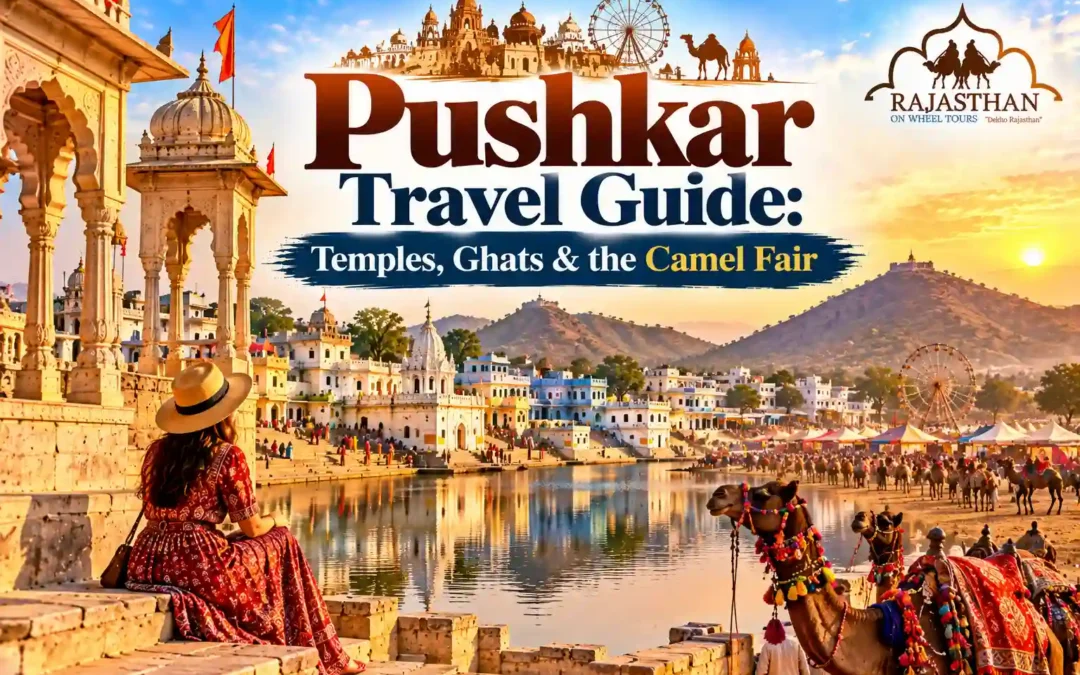
Quick answer: Pushkar is a small holy town about 15 km from Ajmer and roughly 150 km (3 hours) from Jaipur, built around a sacred lake with 52 bathing ghats. It’s home to one of the world’s very few temples dedicated to Lord Brahma and hosts the famous Pushkar Camel Fair, expected around 17–24 November in 2026. Allow one to two days. The town is strictly vegetarian and alcohol-free, and you remove your shoes at the ghats.
Pushkar is small enough to walk across in 20 minutes, yet it feels like its own world. Temple bells ring from dawn. Pilgrims bathe on the ghats while backpackers sip lassi in rooftop cafés. At sunset, drums and conch shells echo across the lake. It’s one of the most relaxed stops in Rajasthan, and one of the most spiritual.
Pushkar at a Glance
| Item | Details |
|---|---|
| Location | Ajmer district, central Rajasthan |
| Distance | About 15 km from Ajmer; about 150 km from Jaipur |
| Famous for | Pushkar Lake, 52 ghats, Brahma Temple, Pushkar Camel Fair |
| Camel Fair 2026 | Expected around 17–24 November (ends on Kartik Purnima) |
| Time needed | 1 – 2 days |
| Best season | October – March |
| Local rules | No meat, eggs or alcohol in town; shoes off at the ghats |
Why Pushkar Is Sacred
Hindu tradition holds that Lord Brahma, the creator, dropped a lotus flower here and a lake appeared where it fell. Pushkar Lake became one of the holiest sites in Hinduism, and a dip in its waters, especially on Kartik Purnima, is believed to wash away sins.
Around the lake are 52 ghats and hundreds of temples. For many Hindus, a pilgrimage to the great holy sites of India isn’t complete without Pushkar.
Top Places to Visit in Pushkar
Pushkar Lake and the ghats
The heart of the town. The 52 ghats step down to the water on all sides, each with its own story and temples. The most important:
- Varaha Ghat: Associated with Vishnu’s boar incarnation.
- Brahma Ghat: Where Brahma is believed to have bathed.
- Gau Ghat (Gandhi Ghat): The main ghat, where some of Mahatma Gandhi’s ashes were immersed. The evening aarti here is the most atmospheric.
Walk the ghats early in the morning, when pilgrims bathe and the light is soft, and again at sunset for the aarti.
Brahma Temple
Pushkar’s most famous temple, and one of the very few in the world dedicated to Brahma. The present structure dates largely from the 14th century, with a red spire, a marble floor set with silver coins left by devotees, and a hamsa (swan), Brahma’s mount, at the entrance.
Phones, cameras and leather bags usually have to be left at the counter outside. Expect queues on festival days.
Savitri Mata Temple
Dedicated to Brahma’s wife, Savitri, this temple sits on Ratnagiri Hill above the town. You can climb the steps (about 45 minutes) or take the ropeway. The view over the lake, the town and the surrounding desert at sunrise or sunset is the best in Pushkar.
Old Rangji Temple
A 19th-century temple dedicated to Vishnu in his Rangji form, with a striking mix of South Indian gopuram, Rajput and Mughal styles. It’s colourful and less crowded than the Brahma Temple.
Varaha Temple
One of the oldest temples in Pushkar, dedicated to Vishnu’s boar avatar. Rebuilt several times over the centuries, it still draws steady worship.
Pap Mochani (Gayatri) Temple
A short climb on the northern side of town, with fine views of the lake and a quieter sunset than Savitri Temple.
The market
The main bazaar runs parallel to the lake. You’ll find silver jewellery, embroidered textiles, leather sandals (sold outside the holy zone), incense, music shops and rose products. Pushkar’s rose gardens supply rose water and gulkand across India.
Pushkar Camel Fair 2026
The Pushkar Fair (Pushkar Mela) is one of the largest camel and livestock fairs in the world, drawing traders, pilgrims and travellers. It takes place in the Hindu month of Kartik and ends on the full moon, Kartik Purnima.
- Expected dates for 2026: around 17 to 24 November. Confirm final dates with Rajasthan Tourism before booking.
- Livestock trading: The first few days, when herders arrive with camels, horses and cattle, are the most authentic. Arrive early for this part.
- Cultural events: Camel races, camel decoration contests, turban-tying, moustache competitions, folk music and dance at the fairground.
- Religious climax: On Kartik Purnima, tens of thousands of pilgrims bathe in the lake.
Planning tips for the fair:
- Book accommodation months ahead. Prices rise sharply, and tented camps pop up around the fairground.
- Visit the livestock grounds at sunrise for the best light and fewer crowds.
- Keep your valuables secure; it’s very crowded.
- Be ready for dust. A scarf and sunglasses help.
Where to Eat in Pushkar
Pushkar is a holy town, so meat, eggs and alcohol are not served within the town. Food is vegetarian, and the variety is surprisingly wide.
- Malpua: Pushkar’s signature sweet, a fried pancake soaked in sugar syrup. Buy it hot from the market stalls.
- Lassi and kachori for breakfast.
- Rajasthani thalis at local restaurants near the market.
- Rooftop cafés serve everything from falafel and pasta to Israeli and Tibetan dishes, thanks to Pushkar’s long backpacker history.
Local Rules and Etiquette
- Remove shoes before stepping onto the ghats and into temples.
- No photography of bathing pilgrims. Many ghats forbid photos near the water; follow the signs.
- Dress modestly, covering shoulders and knees, especially at temples.
- Respect the no-meat, no-alcohol rule.
- Don’t feed or tease the cows and monkeys.
A Scam to Watch For
At the ghats, a “priest” may offer you flowers for the lake and lead you through a puja, then ask for a large “donation.” If you’d like to do a puja, arrange it through your hotel or a temple, agree on the amount in advance, or politely decline flowers offered on the street. A firm, friendly “no, thank you” works.
Suggested Itinerary
One day in Pushkar
- Sunrise: Savitri Mata Temple by ropeway or on foot.
- Morning: Walk the ghats; visit the Brahma Temple before the crowds.
- Late morning: Old Rangji and Varaha temples.
- Afternoon: Rest, shop in the bazaar, try malpua.
- Sunset: Evening aarti at Gau Ghat.
Two days: Add a camel ride or jeep trip to the small dunes on the edge of town, a visit to the rose gardens, and a half-day in Ajmer for the Ajmer Sharif Dargah, the shrine of the Sufi saint Khwaja Moinuddin Chishti.
Best Time to Visit Pushkar
- October to March: Best. Pleasant days and cool nights. November brings the Camel Fair and Kartik Purnima.
- March: Holi in Pushkar is lively and very crowded; it’s best for those who enjoy a party atmosphere.
- April to June: Hot, with fewer visitors.
- July to September: Occasional rain and humidity; the lake fills up.
For how Pushkar fits with the rest of the state through the year, see our best time to visit Rajasthan guide.
How to Reach Pushkar
- From Jaipur: About 150 km, around 3 hours by road.
- From Ajmer: About 15 km, 30 minutes over the Nag Pahar hills.
- From Udaipur: About 280 km, roughly 5 hours via the national highway.
- From Delhi: About 400 km. Pushkar makes a natural overnight stop on a Delhi–Udaipur road trip; see our Delhi to Udaipur guide.
- By train: Ajmer Junction is the main station, with good connections. A few trains reach Pushkar’s own station.
- By air: Kishangarh Airport is the closest; Jaipur has more flights.
Where to Stay
Pushkar has everything from simple guesthouses and backpacker hostels to lakeside havelis and resorts on the edge of town. Stay near the lake for the atmosphere, or outside the centre for quiet and space. During the Camel Fair, tented camps are set up near the fairground.
Tips for Visiting Pushkar
- Wake up early. Pushkar at dawn, with the bells and the mist over the lake, is unforgettable.
- Carry small change for temple donations and snacks.
- Walk everywhere. The centre is compact and the lanes are narrow.
- Watch out for motorbikes in the lanes; they come fast.
- Pair it with Jaipur or Jodhpur. Pushkar sits neatly between them. Our guide to places to visit in Jaipur helps you plan the next stop.
Plan Your Pushkar Trip
We include Pushkar on Rajasthan road trips from Jaipur, Udaipur and Delhi, and arrange cars for the Camel Fair. Tell us your dates and we’ll build the route.
Udaipur: +91-8619315547 | Jaipur: +91-9983889373, or book a car from Udaipur.
Planning more of Rajasthan? Browse all our guides on the Rajasthan Travel Blog.
Frequently Asked Questions
1. What is Pushkar famous for?
Pushkar is famous for its sacred lake with 52 ghats, the Brahma Temple, one of the very few temples in the world dedicated to Lord Brahma, and the annual Pushkar Camel Fair held in November.
2. When is the Pushkar Camel Fair in 2026?
The Pushkar Camel Fair 2026 is expected to run around 17 to 24 November, ending on Kartik Purnima. Confirm the final dates with Rajasthan Tourism before booking.
3. How many days are enough for Pushkar?
One full day covers the ghats, the Brahma Temple and Savitri Temple. Two days lets you slow down, add a camel ride, and visit the Ajmer Sharif Dargah nearby.
4. Is there a ropeway in Pushkar?
Yes. A ropeway runs up to the Savitri Mata Temple on Ratnagiri Hill, saving you a steep 45-minute climb. The view over the lake is best at sunrise or sunset.
5. Is alcohol or non-vegetarian food allowed in Pushkar?
No. Pushkar is a holy town, and meat, eggs and alcohol are not served within the town. Vegetarian food is widely available and varied.
6. How far is Pushkar from Jaipur?
Pushkar is about 150 km from Jaipur, roughly a 3-hour drive. It’s about 15 km from Ajmer, which is the nearest main railway station.
7. What is the best time to visit Pushkar?
October to March is the best time, with pleasant weather. November is the busiest and most colourful month, thanks to the Camel Fair and Kartik Purnima.
8. Can I take photos at the Pushkar ghats?
Photography is restricted near the water at many ghats, out of respect for bathing pilgrims. Follow posted signs and ask before photographing people.
9. What should I eat in Pushkar?
Try malpua, Pushkar’s famous sweet, along with lassi, kachori and Rajasthani thalis. The town’s rooftop cafés also serve a wide range of vegetarian international food.
10. Is Pushkar worth visiting?
Yes. Pushkar offers a peaceful, spiritual atmosphere that’s different from Rajasthan’s forts and palaces, and it fits easily between Jaipur, Ajmer, Jodhpur and Udaipur.